Standard Visa Fees for Different Applicant Categories
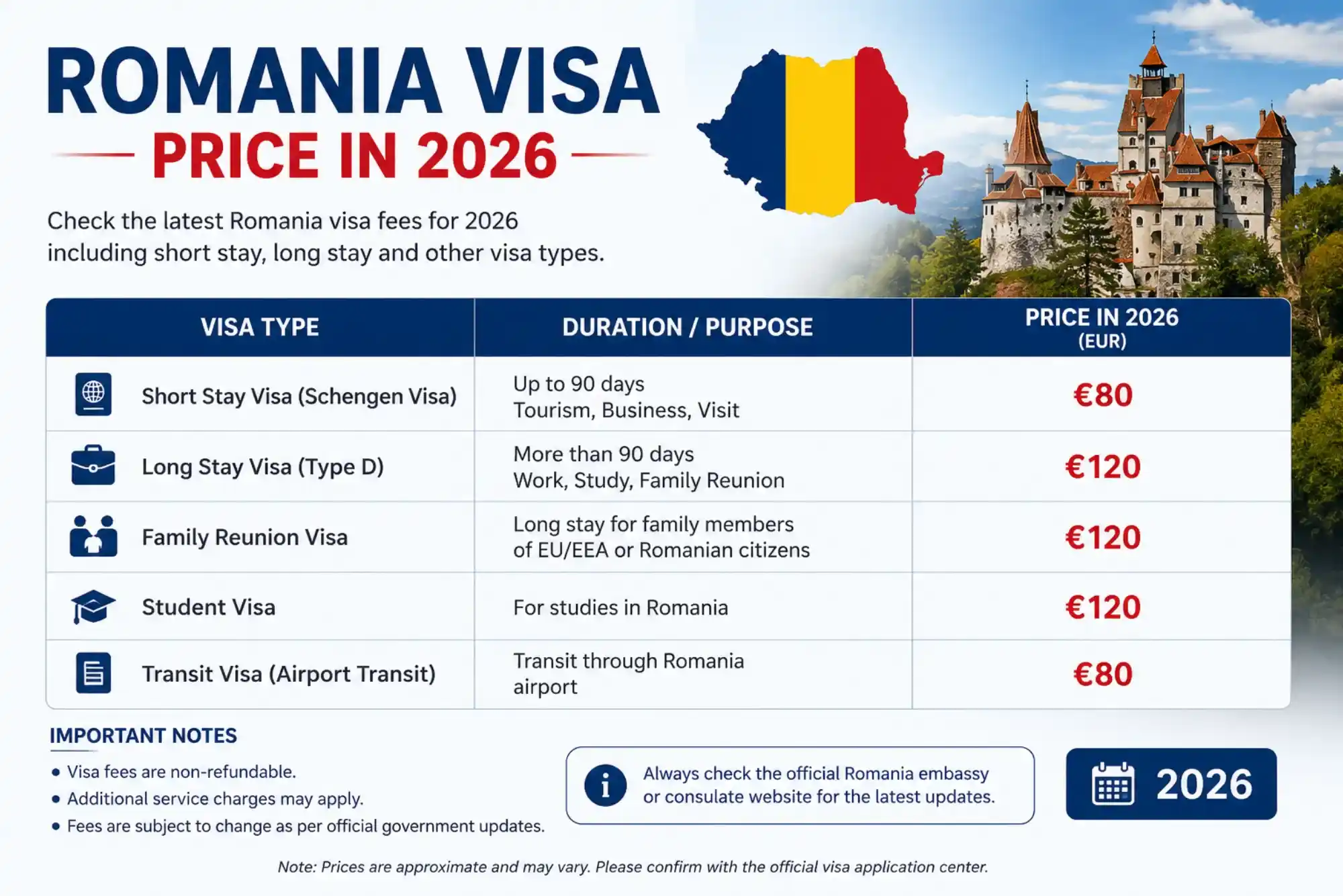
For most non-EU travelers, the standard short-stay visa fee for Romania in 2026 sits at €80. However, this base price changes significantly depending on the age of the applicant and the purpose of the trip. Children between six and twelve years old pay a reduced fee of €40, while children under six are fully exempt from any visa charges. Long-stay visa applicants, such as those moving for work, study, or family reunification, face a higher fee of €120. Airport transit visas, required for certain nationalities, also cost €80. Some countries benefit from visa facilitation agreements with the European Union, reducing their fee to approximately €35. The core takeaway is that while the €80 fee applies to most adult tourists, always verify your specific category before paying.
It is important to note that the Romania visa price in 2026 does not include mandatory ancillary costs such as travel medical insurance, biometrics capture fees, or visa center service charges. These additional expenses often catch travelers off guard, which is why reviewing the full cost breakdown before your appointment can save you from unpleasant surprises at the payment counter.
Understanding the Extra Costs Beyond the Base Visa Fee
Beyond the official visa fee, applicants should budget for several supplementary expenses that are rarely included in the base price but are required for a successful application. Travel medical insurance is mandatory for all non-EU short-stay visa holders, requiring coverage of at least €30,000 in medical expenses. Depending on the provider and trip duration, this typically adds between €25 and €60 to your total costs. Additionally, most countries outsource Romania visa submissions to external service centers such as VFS Global or TLScontact, which charge a separate service fee ranging from €15 to €35 per applicant to cover appointment scheduling, document handling, and biometric enrollment.
While biometrics capture itself is free when done at the visa center during your appointment, you may need to provide your own passport photographs if the center’s equipment is unavailable, costing roughly €5 to €15. Many visa centers also offer optional passport courier delivery for €10 to €25, which saves a second trip to the center. For those requiring document translations or notarized certifications, additional fees of €20 to €50 per document can apply. Travelers researching visa costs for multiple destinations often find it useful to compare these ancillary fees across countries, and saving on travel-related expenses like electronics shopping follows a similar principle of expecting hidden charges.
Long-Stay Visa Expenses and Residency Costs
The Romania visa price in 2026 for long-stay purposes reaches €120, but this represents only the beginning of the financial commitment. Long-stay applicants typically face additional requirements that short-stay travelers do not. Work permits, when applicable, are usually covered by the employer, but document legalization or apostille services can cost €15 to €60 per document. A medical certificate for visa purposes may add another €30 to €80 depending on your country of application.
Furthermore, proof of accommodation and sufficient funds might require notarized rental contracts or bank letters, which carry their own administrative fees. Once you arrive in Romania and apply for a residence permit, separate administrative fees around €60 to €100 come into play. For frequent travelers balancing multiple trip logistics, comparing duty-free and border costs across regions like Thailand provides a helpful framework for understanding how visa expenses fit into a larger travel budget.
Who Qualifies for Reduced Fees or Full Exemptions
Several categories of applicants do not pay the standard Romania visa price in 2026. Children under six years enjoy a full exemption, while students and postgraduate students traveling specifically for study purposes often receive reduced fees or complete waivers depending on their program and nationality. Researchers invited by recognized research institutions typically pay nothing for their visa. Close family members of EU or EEA citizens can also apply free of charge, provided they submit proper proof of their relationship. Representatives of non-profit organizations aged twenty-five or under may qualify for reduced fees or exemptions on a case-by-case basis. It is crucial to understand that even when the visa fee itself is waived, service center handling fees and mandatory travel insurance still apply. Many applicants mistakenly pay the full amount when they qualify for an exemption, so always ask your local Romanian consulate before submitting payment.
Budgeting Realistically for Your Romania Visa Application
Visa application costs add up quickly, but several practical strategies keep your total expenses under control without compromising the quality of your application. Applying directly through the embassy rather than an external service center eliminates the service fee altogether, though this option is not available in every country.
Comparing annual travel insurance policies against single-trip coverage often reveals savings for frequent travelers. Using existing passport photos that still meet official guidelines regarding age, size, and background removes one small but annoying expense. Submitting complete and accurate documents the first time prevents rescheduling fees and potential extra service center visits. Finally, always double-check whether you qualify for a visa fee waiver before paying, as this single step can save you €80 or more.
For travelers planning a broader European itinerary that includes Romania, organizing outdoor activities like hiking across different countries can help you separate visa costs from on-the-ground spending, making your overall travel budget more transparent and easier to manage.
Common Questions About Visa Fees and Refund Policies
One of the most frequent questions about the Romania visa price in 2026 concerns refundability. The visa fee is non-refundable under any circumstances, whether your application is rejected, withdrawn, or approved. The fee covers administrative processing, not the outcome. Payment methods vary by location, though most visa centers and embassies accept credit and debit cards.
Some remote or smaller consulates may require cash in local currency, so verifying payment options before your appointment is wise. Regarding Romania’s Schengen status, the country is not yet a full Schengen member for land border controls, but its visa fees already mirror Schengen standards. Once full integration is finalized, the official EU visa fee regulation will apply directly, but for now, the current structure remains as outlined throughout this guide.
Final Financial Planning for Your Romania Visa
The Romania visa price in 2026 remains competitive compared to other European destinations, but the final cost always depends on your nationality, visa type, and whether you use optional services. A realistic budget for a single adult short-stay visa application, including the €80 fee, insurance, service center charge, and at least one translation, typically ranges from €130 to €170. Families with children pay less per child under twelve, though service fees apply per applicant regardless of age.
Planning ahead and reading the official checklist from the Romanian embassy in your country saves both money and frustration. Visa fees change periodically, so always verify the latest amounts on the official Ministry of Foreign Affairs website or your local Romanian consulate before submitting payment. For additional travel planning resources and cost breakdowns across different countries, exploring dedicated price category guides can help you compare visa and travel expenses worldwide. Similarly, creating evergreen travel content shares the same core principle as budgeting for a visa: accurate, up-to-date information saves both time and money in the long run.
Related Reading: Russian Transit Visa Price in 2026: Updated Fees and Price Breakdown
Related Reading: Singapore E Visa Price in 2026: Updated Fees and Price Breakdown
Related Reading: South Africa Visa Price in Nigeria in 2026: Updated Fees and Price Breakdown