
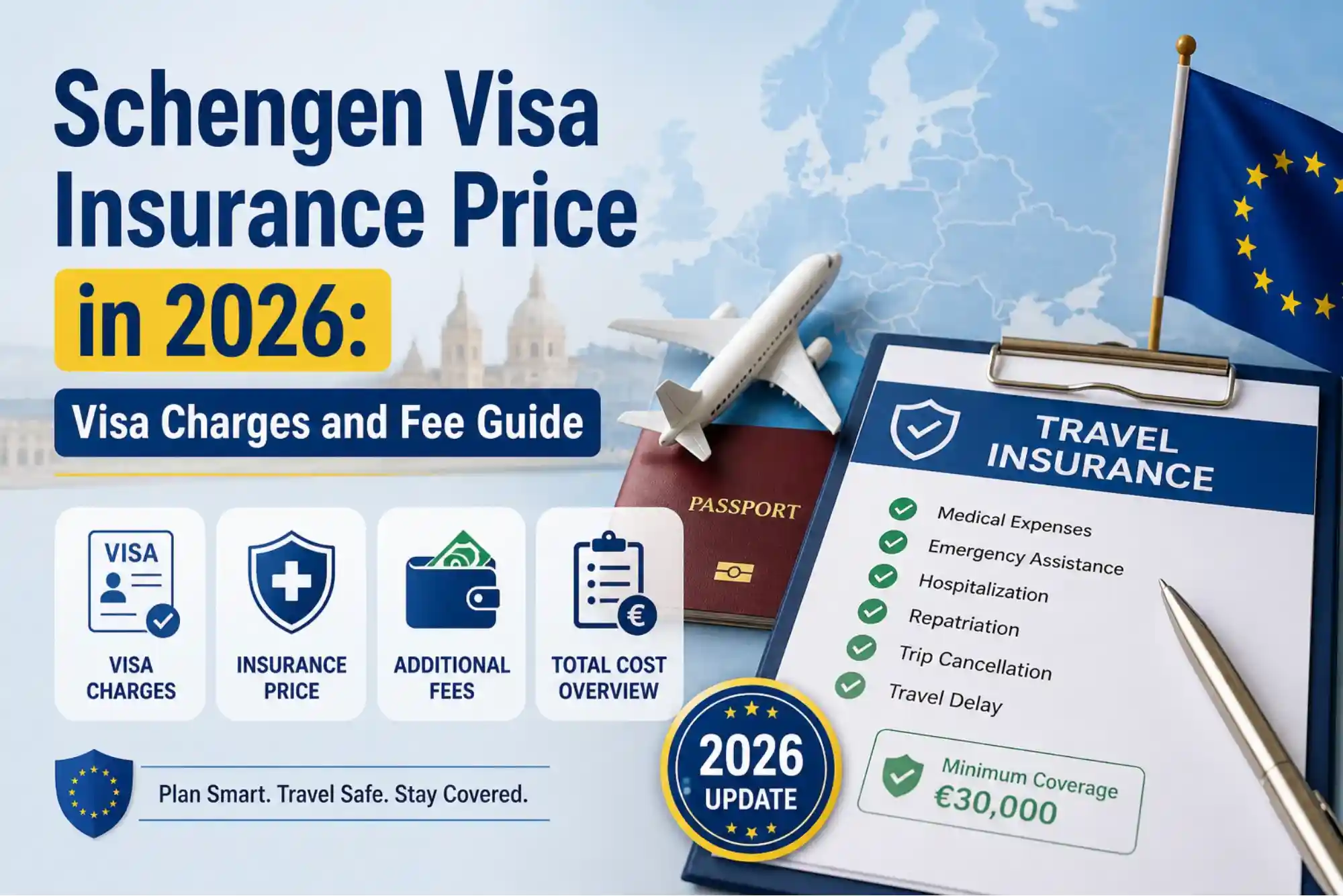
This guide offers a detailed breakdown of insurance costs, historical price trends from 2014 to 2026, and practical insights to help you choose the right policy. Whether you’re traveling for tourism, business, or study, this article will help you make informed decisions.
What Is Schengen Visa Insurance?
Schengen visa insurance is a mandatory travel insurance policy required for anyone applying for a visa to visit countries within the Schengen Area. It must meet specific criteria:
- Minimum coverage of €30,000
- Coverage for medical emergencies and repatriation
- Validity across all Schengen countries
- Coverage for the entire duration of stay
Without valid insurance, your visa application will be rejected, making it a non-negotiable requirement.
Schengen Visa Insurance Price in 2026
In 2026, the average cost of Schengen travel insurance varies based on age, duration of stay, and coverage level. Here’s a general estimate:
- 7 days: $10 – $25
- 15 days: $20 – $40
- 30 days: $35 – $70
- 90 days: $80 – $150
Travelers from Pakistan may find slightly higher premiums due to regional risk factors and currency exchange rates.

Schengen Visa Insurance Price Table (2014–2026)
The table below shows the estimated average price for a standard 30-day Schengen travel insurance policy over the years:
| Year | Average Insurance Price (USD) | Trend |
|---|---|---|
| 2014 | $20 – $35 | Low baseline pricing |
| 2015 | $22 – $38 | Slight increase |
| 2016 | $25 – $40 | Stable growth |
| 2017 | $28 – $45 | Moderate rise |
| 2018 | $30 – $50 | Increased demand |
| 2019 | $32 – $55 | Pre-pandemic peak |
| 2020 | $35 – $60 | COVID impact (higher risk) |
| 2021 | $40 – $70 | Strict coverage policies |
| 2022 | $38 – $65 | Market stabilization |
| 2023 | $35 – $60 | Competitive pricing returns |
| 2024 | $35 – $65 | Balanced demand |
| 2025 | $40 – $70 | Inflation-adjusted increase |
| 2026 | $45 – $75 | Higher healthcare costs |
Why Prices Have Increased Over Time
Several factors have influenced the rise in Schengen visa insurance prices:
1. Medical Cost Inflation
Healthcare expenses in Europe have steadily increased, directly impacting insurance premiums.
2. Post-Pandemic Coverage Expansion
Insurance providers now include broader coverage for unforeseen medical situations, including pandemic-related risks.
3. Currency Fluctuations
Exchange rate variations, especially for travelers from countries like Pakistan, affect final insurance costs.
4. Higher Travel Demand
With more people traveling internationally, insurers have adjusted pricing to reflect increased claim risks.
Factors That Affect Schengen Insurance Costs
Not all travelers pay the same price. Several variables determine your premium:
- Age: Older travelers pay higher premiums
- Trip Duration: Longer stays increase cost
- Coverage Amount: Higher limits mean higher prices
- Travel Purpose: Business or high-risk travel may cost more
- Pre-existing Conditions: Additional coverage increases premiums
How to Choose the Right Insurance Plan
Selecting the right policy is about balancing cost and coverage. Here’s what to consider:
- Check if it meets Schengen visa requirements
- Ensure emergency medical coverage is included
- Look for zero or low deductible plans
- Compare multiple providers before purchasing
If you’re already planning visa expenses, you may find it helpful to review a broader cost breakdown like this UK visa fee guide for 2026 to understand how insurance fits into total travel costs.
Common Mistakes to Avoid
- Buying the cheapest plan without checking coverage
- Ignoring policy exclusions
- Choosing incorrect travel dates
- Not verifying Schengen compliance
Additional Visa Costs to Consider
Insurance is just one part of your travel budget. Other costs include:
- Visa application fee (€80 for adults)
- Biometric fee
- Flight reservations
- Accommodation bookings
For a deeper understanding of visa-related expenses across countries, you can explore this Canada visa cost breakdown, which provides helpful comparisons.
Tips to Save on Schengen Insurance in 2026
- Book insurance early to avoid last-minute price hikes
- Compare multiple providers online
- Choose only required coverage (avoid unnecessary add-ons)
- Use group or family plans for discounts
Travelers planning Middle East trips may also benefit from comparing regional visa costs, such as this Dubai visit visa price guide, to better allocate budgets.
Is Schengen Insurance Worth It?
Absolutely. While it may seem like an extra expense, Schengen travel insurance protects you from potentially massive medical bills abroad. A minor emergency in Europe can cost thousands of dollars, making insurance a smart and necessary investment.
Final Thoughts
The Schengen visa insurance price in 2026 reflects global trends in healthcare costs, travel demand, and risk management. While prices have gradually increased since 2014, the value of comprehensive coverage has never been more important.
By understanding historical trends, comparing options, and choosing wisely, you can secure affordable insurance without compromising on protection. A well-planned travel budget always includes insurance—not just as a requirement, but as peace of mind.