Introduction
Flying with a dog or cat can be much easier when you choose the right carrier before reaching the airport. The best airline approved pet carriers need to do more than look comfortable. They must fit beneath the seat, provide adequate ventilation, keep your pet secure, and comply with your airline’s specific cabin rules.
One important detail is often overlooked: there is no single carrier size that every airline accepts. Airlines set their own under-seat dimensions, and aircraft designs can create even more variation. The International Air Transport Association (IATA) also explains that it does not certify or endorse specific commercial pet carriers. Instead, travelers should ensure the carrier meets applicable requirements and the airline’s rules.
That makes choosing the best airline approved pet carriers less about finding a bag with an “airline approved” label and more about finding one that actually works for your pet, your route, and your aircraft.
What Makes the Best Airline Approved Pet Carriers?
The best airline approved pet carriers balance three things: airline compliance, under-seat compatibility, and animal comfort. A carrier may have excellent reviews but still be unsuitable if it is too tall or cannot fit beneath your particular aircraft seat.
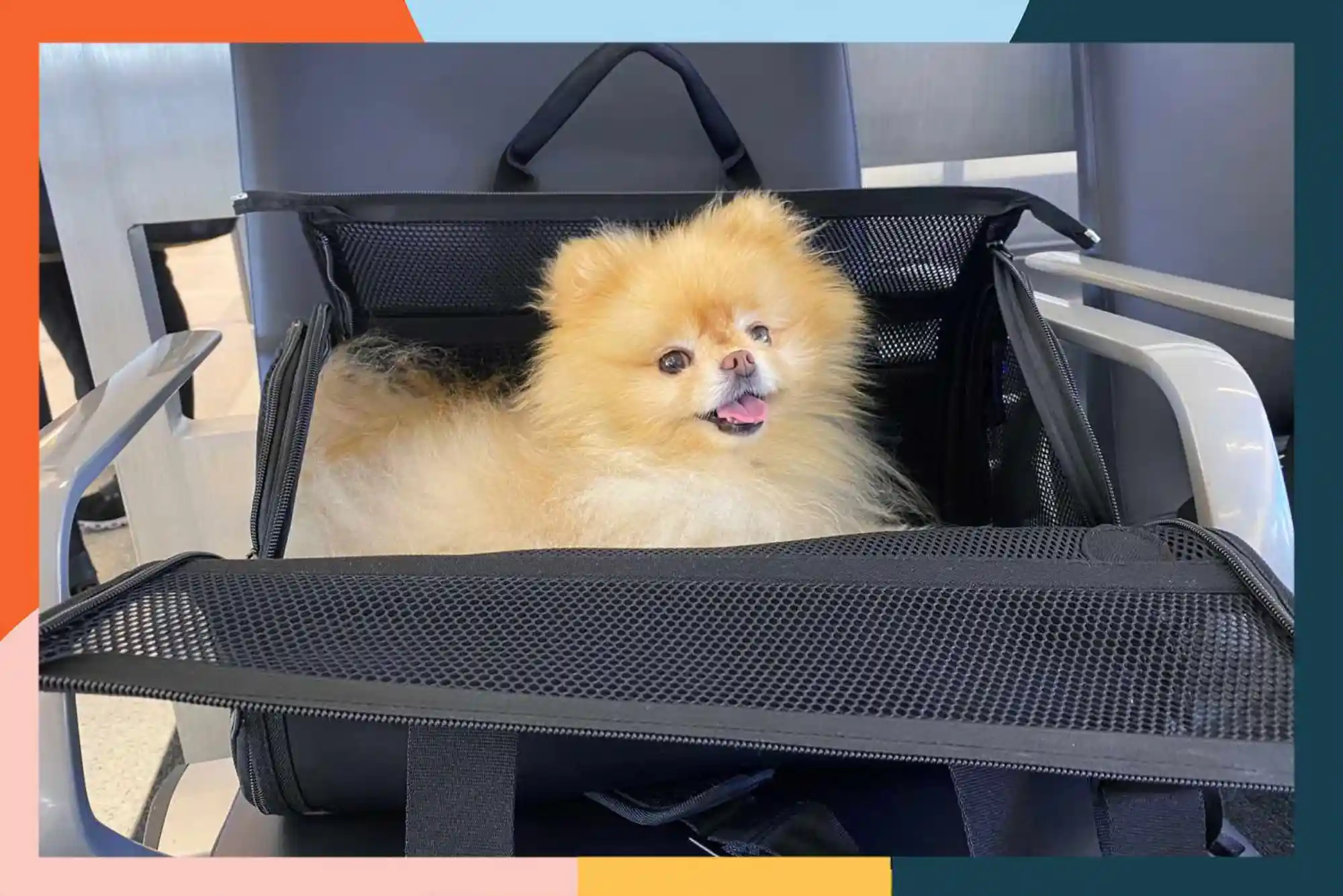
For in-cabin travel, soft-sided carriers are often practical because they can flex slightly around the limited space beneath an aircraft seat. American Airlines, for example, recommends soft-sided collapsible carriers and specifies ventilation on three or more sides. Its published soft-sided maximum is 18 × 11 × 11 inches.
However, flexibility should not mean crushing the carrier. Excessive compression can restrict ventilation and reduce the usable interior space. IATA specifically warns that compressing ventilation openings can contribute to poor airflow and heat buildup.

A good cabin carrier should therefore be flexible enough to fit the aircraft while remaining structured enough to protect your pet.
Why Under-Seat Fit Matters So Much
Under-seat fit is one of the most important factors when choosing the best airline approved pet carriers. In most cabin-pet situations, your pet must remain inside the carrier, and the carrier must be placed beneath the seat in front of you.
The challenge is that aircraft seats are not identical. Seat structures, floor equipment, emergency equipment, and aircraft models can affect the available space. Even an advertised maximum carrier size may not work on every aircraft.
Current airline guidance shows why checking the exact dimensions matters. American Airlines publishes 18 × 11 × 11 inches for soft-sided carriers, while other airlines can use different limits depending on their aircraft and policies.
Before purchasing a carrier, check the operating airline rather than relying only on the airline that issued your ticket. A codeshare flight may be operated by another carrier with different cabin-pet rules.
Soft-Sided vs. Hard-Sided Pet Carriers
Soft-sided carriers are usually the most practical choice for under-seat cabin travel because their flexible construction can accommodate slightly irregular under-seat spaces. They are also generally easier to carry through terminals.
The best airline approved pet carriers for cabin use often feature reinforced walls, mesh ventilation panels, secure zippers, and a leak-resistant base. These features provide structure without making the carrier completely rigid.
Hard-sided carriers can work for certain airlines and aircraft, but their fixed dimensions make them less forgiving. A rigid carrier that is slightly too tall cannot be compressed into a smaller space.
American Airlines illustrates this difference in its published rules. It permits different hard-sided dimensions depending on whether the flight is operated by American Airlines mainline or American Eagle, while recommending a soft-sided carrier for general use.
For travelers who fly frequently, the best approach is to select the carrier based on the strictest aircraft requirement on the itinerary.
How to Choose the Right Carrier Size
Carrier sizing should start with your pet rather than the shopping page. Measure your pet while standing naturally and consider the usable interior dimensions of the carrier.
IATA guidance emphasizes that an in-cabin animal should have enough space to sit, stand, turn around, and lie down naturally. The carrier must also be secure, escape-resistant, leak-resistant, and adequately ventilated.
This creates an important balancing act.
A carrier that is large enough for your pet may exceed the airline’s under-seat dimensions. A carrier that fits perfectly under the seat may be too restrictive for the animal.
For that reason, the best airline approved pet carriers are not necessarily the largest ones you can find. They are the smallest carriers that safely accommodate your pet while meeting the airline’s physical requirements.
Ventilation Should Never Be an Afterthought
Ventilation is one of the most important safety features in a pet carrier. Mesh panels should provide continuous airflow without creating large openings through which a pet could escape.
IATA guidance states that appropriate ventilation is essential and recommends that a carrier have sufficient ventilation openings. It also warns that under-seat compression can interfere with ventilation.
When evaluating the best airline approved pet carriers, look beyond the number of mesh panels. Consider whether those panels remain open after the carrier is placed under the seat.
A carrier can have excellent ventilation at home but lose airflow when its sides are pushed against the seat structure. This is one reason a structured soft-sided design can be more useful than a completely floppy travel bag.
Comfort and Interior Design Matter
Air travel can be stressful for pets, so comfort should be part of your carrier decision. The interior should have enough padding to create a stable surface without taking away too much usable space.
A waterproof or water-resistant base is also useful because accidents can happen during long journeys. IATA recommends absorbent bedding and says the container should be capable of containing urine or feces produced during travel.
The carrier should also have secure closures. Zippers should not be positioned where a clever pet can easily push them open. Some designs include locking clips or zipper attachments that provide additional security.
For anxious pets, a carrier with a partially covered design can create a darker, more sheltered environment. However, the covering should never block ventilation.
Check the Carrier Against Your Airline Before Flying
One of the biggest mistakes travelers make is buying a carrier first and checking airline rules afterward.
The phrase “airline approved” on a product description does not guarantee acceptance by every airline. IATA explicitly states that it does not approve or endorse individual commercial pet carrier brands or models.
Instead, check your airline’s current pet policy and compare its published carrier dimensions with the carrier’s external measurements.
Do this again shortly before departure because airline policies can change. Also check every segment of your journey, especially if another airline operates one of the flights.
American Airlines, for example, notes that aircraft-specific under-seat limitations can affect whether a carrier is acceptable.
This simple check can prevent an unpleasant surprise at check-in.
Train Your Pet to Use the Carrier
Even the best airline approved pet carriers will not make a flight comfortable if your pet has never spent time inside one.
Introduce the carrier well before your travel date. Leave it open at home and allow your pet to investigate it without pressure. Gradually encourage your pet to rest inside for longer periods.
Practice closing the carrier for short periods before attempting a longer session. You can then progress to carrying the bag around the house, taking short car rides, and eventually spending time in busier environments.
IATA recommends introducing dogs and cats to their travel containers well before the journey to reduce the stress associated with confinement.
This preparation is often more valuable than buying an expensive carrier without giving your pet time to become familiar with it.
What to Look for in a High-Quality Cabin Carrier
The best airline approved pet carriers generally have several practical features working together. A strong frame helps prevent the bag from collapsing onto your pet. Multiple ventilation panels support airflow. A secure closure system reduces escape risks, while a leak-resistant bottom makes cleaning easier.
Carrying comfort matters for the owner, too. A padded shoulder strap, comfortable handles, and a lightweight construction can make airport transfers much easier.
Storage pockets can also be useful for documents, treats, waste bags, or a collapsible water bowl. However, extra pockets should not make the carrier excessively bulky.
The goal is a carrier that remains practical throughout the entire travel day, from leaving home to reaching your destination.
Common Mistakes to Avoid
A common mistake is choosing a carrier based only on external length and width. Height can be the real problem when dealing with under-seat storage.
Another mistake is assuming that a soft carrier can be squeezed into any space. If compression blocks mesh panels or leaves your pet unable to move naturally, the carrier is not a good solution.
Travelers should also avoid choosing a carrier based entirely on weight capacity. A stated weight limit does not tell you whether your pet has enough usable interior space.
Finally, do not wait until the airport to discover that your airline has restrictions on pets, carriers, aircraft, or cabin locations. Confirm the rules before travel.
Are Airline Approved Pet Carriers Safe for Long Flights?
A suitable carrier can be used for cabin travel, but safety depends on proper sizing, ventilation, airline compliance, and your pet’s individual needs.
IATA recommends minimizing stress during air travel and notes that sedating or tranquilizing dogs and cats can create risks. It advises that any medication should be given only under veterinary direction.
For longer journeys, consider your pet’s ability to remain comfortable inside the carrier for the entire travel period. Your preparation should include appropriate bedding, access to water when practical, and bathroom planning before departure.
FAQs
What size pet carrier fits under an airplane seat?
There is no universal size for every airline. Many U.S. airlines use dimensions around 18 × 11 × 11 inches for soft-sided carriers, but individual airlines and aircraft can have different requirements. Always check the specific airline and aircraft before flying.
Can I take a soft-sided pet carrier on a plane?
Yes, many airlines permit soft-sided carriers for pets traveling in the cabin. Soft-sided designs are often practical because they can flex slightly under the seat. However, the carrier still needs to meet the airline’s requirements and maintain adequate ventilation.
What is the best airline approved pet carrier for under-seat use?
The best option is one that fits your airline’s published under-seat dimensions while allowing your pet to sit, stand, turn, and lie naturally. A secure, well-ventilated soft-sided carrier is often a practical choice for cabin travel.
Do airlines actually approve pet carriers?
Generally, “airline approved” is not a universal certification. IATA states that it does not certify or endorse specific commercial dog or cat carriers. Airline acceptance depends on the carrier’s construction, dimensions, your pet, and the specific airline and aircraft.
Can a pet carrier be too big for under the seat?
Yes. A carrier can be comfortable for your pet but still be too large for the aircraft’s under-seat space. This is why travelers should compare the carrier’s external dimensions with the airline’s current requirements before purchasing.
Do pets have to stay inside their carrier during a flight?
For standard in-cabin pet travel, airlines generally require the pet to remain inside the carrier. IATA guidance states that dogs and cats should not be removed from their containers during the flight.
How do I know if my dog will fit comfortably in an airline carrier?
Measure your dog’s length, height, and width and compare those measurements with the carrier’s usable interior. Your dog should have enough space to sit, stand, turn around, and lie naturally rather than simply fitting inside the bag.
Choosing the best airline approved pet carriers is really about finding the right balance between airline compliance, under-seat fit, ventilation, security, and your pet’s comfort. A carrier that looks attractive online is not necessarily suitable for your aircraft.
Start by checking your airline’s current cabin-pet policy. Then measure your pet and compare those measurements with the carrier’s usable interior. Pay particular attention to height, ventilation, secure closures, padding, and the carrier’s ability to fit beneath the seat without blocking airflow.