Introduction
Taking your dog along for a drive can be fun, but an unsecured pet can become a serious distraction and safety risk. Sudden braking, sharp turns, or a collision can cause a loose dog to move violently through the vehicle. That is why choosing the best dog seat belts and crash-tested car hammocks requires more than finding a product with a strong-looking buckle or attractive fabric.
The key is understanding what each product actually does. A dog seat belt or safety harness is designed to restrain your pet. A car hammock mainly creates a comfortable, contained backseat area while protecting upholstery. These products can work together, but they should not be treated as interchangeable.
The Center for Pet Safety (CPS) independently tests pet travel products and maintains a certification program covering products such as safety harnesses, carriers, and travel crates. Its published research also shows why simply calling something “crash-tested” is not enough.
Why Backseat Dog Safety Matters
A dog riding loose in a vehicle has little protection against sudden changes in speed. Even a normal emergency stop can send a pet sliding across the seat or into the footwell.
There is another problem: movement inside the cabin can distract the driver. A dog jumping toward the front seats, climbing onto the center console, or moving between passengers can interfere with driving.
For these reasons, a proper restraint should be considered part of responsible vehicle preparation rather than an optional accessory.

The back seat is generally a sensible location for dogs because it keeps them away from the front passenger airbag. However, simply putting a dog in the back seat does not provide crash protection. The dog still needs an appropriate restraint system.
What Makes the Best Dog Seat Belts Safer?
The phrase “dog seat belt” covers several different products. Some are simple tethers that attach a dog’s harness to the vehicle’s seat-belt system. Others are components of a complete crash-tested restraint.
That distinction matters.
Look for independent crash testing
A manufacturer saying that a product is “tested” does not necessarily mean it has passed an independent crash test. CPS recommends looking for its Certified logo when shopping for pet travel products. Its certification program involves independently developed safety standards, testing requirements, and product-quality commitments.
A useful product description should explain what was tested, which product configuration was tested, and what size or weight range was covered.
Use a purpose-built harness
A walking harness and a vehicle safety harness are not automatically the same thing. A regular harness may be comfortable for walks but may not have been designed to manage the forces involved in a vehicle collision.
CPS’s harness research demonstrates why strength alone is not enough. Its preliminary testing evaluates harness strength, but passing that stage does not itself establish crash protection. Products moving forward must undergo additional crash testing.
Check your dog’s size and weight
A restraint needs to match the dog using it. Do not assume that a harness designed for a similar-looking dog will perform identically for yours.
Check the manufacturer’s weight range, chest measurements, adjustment points, and fitting instructions before purchasing.
A poorly fitted restraint can create discomfort during everyday driving and may not position the dog as intended during a collision.
Understanding Crash-Tested Car Hammocks
The phrase “crash-tested car hammock” can be confusing.
A typical dog car hammock stretches between the front and rear headrests. It creates a fabric platform over the back seat and often includes side panels that help prevent the dog from moving toward the doors or front cabin.
A hammock can be extremely useful for everyday travel. It helps prevent a dog from falling into the footwell, improves traction on some seats, and protects upholstery from mud, fur, claws, and accidents.
But a hammock should not automatically be considered a crash restraint.
Current CPS certification information covers categories such as safety harnesses, pet travel carriers, and travel crates. A standard hammock should therefore be evaluated separately from a certified crash-protection product.
A hammock and a restraint serve different purposes
Think of the hammock as part of the travel environment.
Think of the harness or secured carrier as the actual restraint.
For many dogs, combining both makes practical sense. The hammock creates a more comfortable backseat surface while the crash-tested restraint limits the dog’s movement.
This approach also prevents a common mistake: buying a hammock because it looks secure and assuming it will protect the dog during a collision.
Features to Look for in a Dog Car Hammock
Although a hammock is not a substitute for a crash-tested restraint, its design still matters.
Secure headrest attachments
The straps should attach firmly to the vehicle’s headrests and remain secure when the dog moves around.
Loose straps can allow the hammock to sag or shift toward the footwell.
Nonslip backing
A nonslip surface can help keep the hammock from sliding around during normal driving. This is particularly useful for dogs that stand, turn, or frequently change positions.
Durable materials
Look for sturdy fabric that can handle claws, repeated washing, and everyday use. Water-resistant materials are useful if your dog gets muddy after walks or outdoor adventures.
Seat-belt access
One of the most useful features is an opening that allows a restraint to connect through the hammock.
This makes it easier to use the hammock and dog seat belt together instead of choosing between comfort and restraint.
Proper vehicle fit
Measure your back seat before buying. Cars, SUVs, and trucks have different seat widths and headrest configurations.
A hammock that fits one vehicle perfectly may bunch up or leave gaps in another.
How to Combine a Dog Seat Belt With a Car Hammock
The safest setup begins with the restraint, not the hammock.
First, place the hammock correctly over the rear seat. Secure every headrest strap according to the manufacturer’s instructions. Make sure the material lies flat and that the seat-belt access point is available.
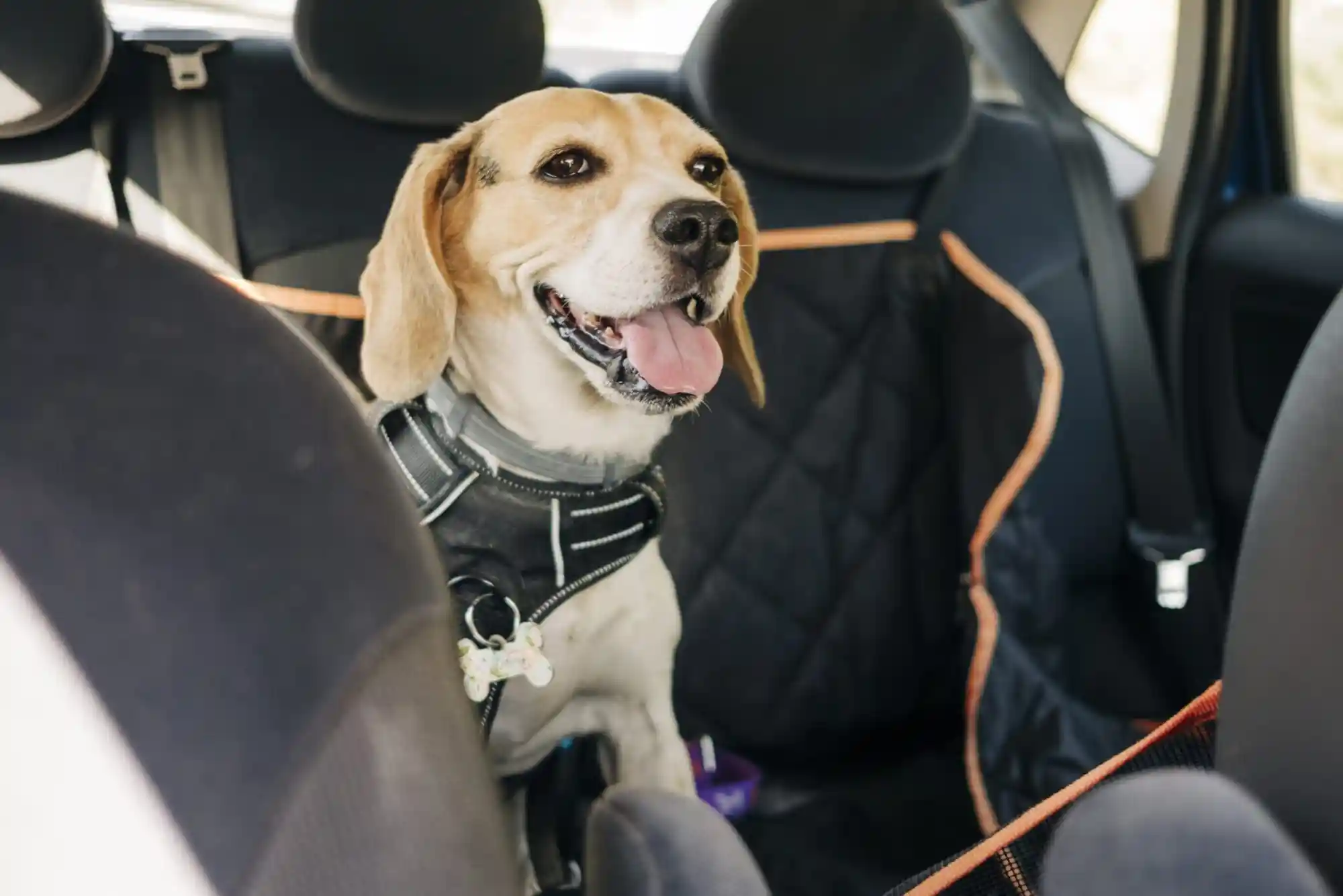
Next, put your dog into the appropriate vehicle harness. Adjust it so it fits securely without being excessively tight.
Connect the restraint using the manufacturer’s recommended attachment method.
Avoid adding unnecessary extensions. CPS specifically warns against extension tethers and zipline-style devices because excessive movement can increase injury risks.
Finally, take a short drive and observe your dog’s behavior. Your dog should be able to sit, stand, and lie down comfortably without excessive movement.
Common Mistakes to Avoid
Even good equipment can become less effective when used incorrectly.
Using a collar as the restraint point
Attaching a vehicle tether directly to a collar can create dangerous forces around the dog’s neck. A purpose-built vehicle harness is a more appropriate choice for restrained travel.
Using a long extension tether
Longer is not necessarily safer. Excess slack allows more movement before the restraint becomes effective. CPS advises against extension tethers and recommends certified restraint systems instead.
Assuming “crash-tested” means certified
This is one of the biggest shopping traps.
Always investigate the claim. Look for the testing organization, protocol, product name, model, and applicable weight range.
CPS publishes its test results and certification information publicly, making it possible for owners to verify specific products.
Letting the dog ride in the front seat
Front-seat airbag deployment can pose a serious risk to pets. Keeping the dog properly restrained in the rear seating area is generally a safer arrangement.
Buying based only on price
A cheap tether may look nearly identical to a more substantial restraint in an online photograph. Appearance does not reveal how a product performs under crash forces.
Independent testing and correct installation are much more meaningful than a heavy-looking buckle.
What About Small Dogs?
Small dogs have several travel options.
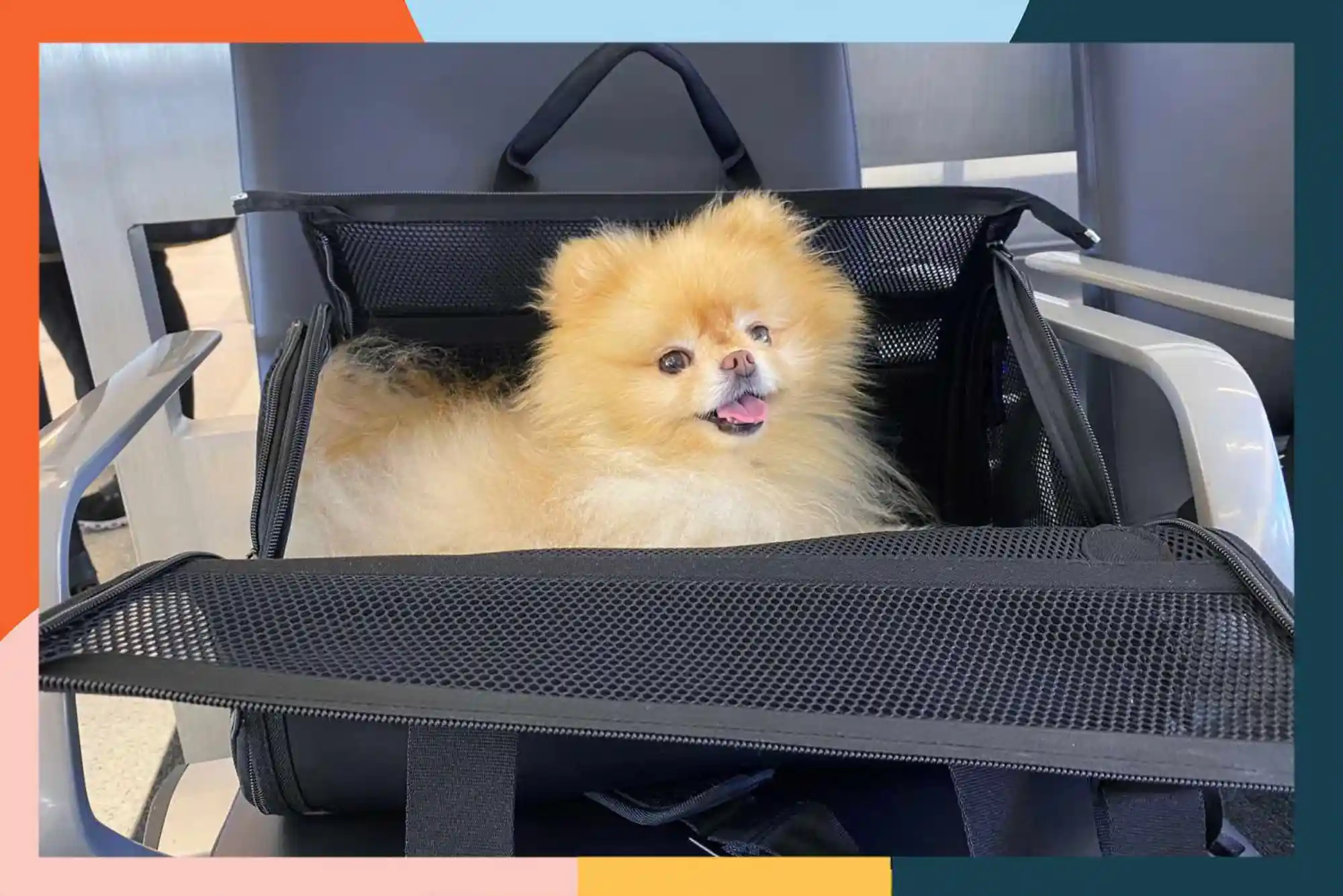
A properly designed carrier can be suitable when it is correctly secured inside the vehicle. CPS currently lists independently tested and certified pet carriers, including products with published test results and specific test-dog weights. For example, the PawsInCar Expandable Pet Carrier was tested in January 2026 and received a five-star CPS rating for its tested configuration.
The Diggs Passenger Carrier is another example of a carrier with published CPS testing information. Its certification page records a five-star rating and an 18-pound test dog.
For small dogs, the important point is not simply finding the smallest carrier. The carrier needs to be appropriate for the dog’s size and secured according to the manufacturer’s instructions.
What About Large Dogs?
Large dogs can be more challenging because they need enough room to sit and lie down while remaining appropriately restrained.
A crash-tested harness may work for some large dogs, provided the harness is specifically rated for their weight and body size.
A properly secured travel crate is another option. CPS has conducted dedicated research into pet travel crates and their crashworthiness, including products marketed with crash-protection claims.
A hammock can still be useful underneath or around the travel setup for protecting the vehicle, but it should not replace the restraint itself.
How to Choose the Right Setup for Your Dog
Start by considering your dog’s size, temperament, and travel habits.
A calm medium-sized dog that prefers to sit or lie down may do well with a properly fitted vehicle harness and backseat hammock.
A small dog may be more comfortable in a correctly secured carrier.
A large dog that becomes restless may require a different setup, such as a suitable harness or appropriately secured crate.
Your vehicle matters too. Check the seat shape, headrests, seat-belt arrangement, and available passenger space before purchasing equipment.
Most importantly, evaluate the complete system rather than one product in isolation.
Are Dog Car Hammocks Worth It?
Yes, a quality hammock can be useful, but its value depends on what you expect it to do.
For protecting upholstery, reducing slipping, keeping dogs away from the footwell, and creating a more contained backseat area, a hammock can be very practical.
For collision protection, however, it should not be treated as a standalone restraint.
The strongest approach is to pair a properly fitted, independently tested restraint with a well-installed hammock when the hammock’s comfort and protective features are useful for your vehicle.
That distinction is supported by current pet-safety guidance and CPS’s focus on purpose-built harnesses, carriers, and crates for crash protection.
FAQs
Are dog seat belts actually safe?
A properly designed and appropriately fitted dog restraint can provide important protection by limiting a dog’s movement during vehicle travel. However, not every product sold as a dog seat belt has independent crash-testing evidence. Look for identifiable testing and certification rather than relying only on marketing language.
Are dog car hammocks safe in an accident?
A hammock can help contain a dog during normal driving and protect the vehicle’s interior, but a standard hammock should not automatically be considered a crash-tested restraint. Use a suitable crash-tested harness, carrier, or crate when crash protection is the goal.
Is it better for a dog to wear a harness or use a crate in the car?
Both can be appropriate depending on the dog’s size, behavior, vehicle, and the specific product. The important factor is whether the selected system is designed for vehicle travel and has credible independent testing behind its safety claims.
Should a dog wear a seat belt in the back seat?
Yes, properly restraining a dog in the back seat can reduce uncontrolled movement during driving. The restraint should be designed for vehicle use, correctly fitted, and attached according to its instructions.
Can I use a regular walking harness with a dog seat belt?
You should not assume that a walking harness provides crash protection. Vehicle restraints experience forces that ordinary walking equipment may not have been designed to handle. Choose equipment specifically intended for vehicle travel and check its independent testing information.
How do I know if a dog seat belt is crash-tested?
Look for specific information about the testing organization, test protocol, product model, and tested weight range. CPS maintains public test results and a certification directory that can be used to verify certified products.
Can a dog car hammock replace a seat belt?
No. A hammock and a restraint perform different jobs. The hammock can improve comfort and contain the seating area, while a properly designed restraint is intended to limit the dog’s movement.
Should I use an extension tether for my dog?
CPS advises against extension tethers and zipline-style devices because they can permit excessive movement and increase injury risks.
Choosing the best dog seat belts and crash-tested car hammocks starts with understanding the difference between comfort, containment, and actual crash protection.
A hammock can keep your back seat cleaner and give your dog a more stable place to travel. A properly fitted, independently tested harness, carrier, or crate serves the more important role of restraint.
Before buying, check independent testing, weight limits, fit, attachment points, and installation instructions. Avoid products that make vague “safety” claims without explaining how they were tested.