
Introduction
Flying with an animal can make travel feel more manageable, especially when that animal supports your emotional or psychiatric needs. However, the rules are different for an Emotional Support Animal (ESA) and a Psychiatric Service Dog (PSD). Understanding that difference is essential before booking a flight.
If you are researching How to Fly with an Emotional Support Animal (ESA) vs Psychiatric Service Dog (PSD), start by identifying your animal’s legal status. Under current U.S. Department of Transportation (DOT) rules, an ESA is not considered a service animal. A psychiatric service dog is considered a service animal when it is individually trained to perform disability-related tasks.
This distinction affects airline acceptance, documentation, cabin access, and preparation. Therefore, travelers should check the current rules before every trip.
Understanding ESA and Psychiatric Service Dogs
An Emotional Support Animal primarily provides comfort through its presence. It does not need to perform a specific disability-related task.
A Psychiatric Service Dog, however, is trained to perform work or tasks directly related to a person’s disability. Examples can include interrupting harmful behaviors, retrieving medication, or providing a trained response during a psychiatric episode.
The important point is that emotional comfort alone does not establish service-animal status under current DOT aviation rules. The DOT defines a service animal for air travel as a dog individually trained to perform tasks for a qualified person with a disability.

Consequently, simply having a mental health condition does not automatically make a pet a psychiatric service dog. The dog’s training and disability-related tasks are central to the distinction.
How to Fly with an Emotional Support Animal (ESA) vs Psychiatric Service Dog (PSD)
The biggest difference concerns how airlines classify the animal.
Under current U.S. rules, an ESA is generally treated under the airline’s pet policy. Airlines may choose to transport emotional support animals, but they are not required to recognize them as service animals under the Air Carrier Access Act.
A properly trained psychiatric service dog receives service-animal protections under DOT rules. Airlines generally must allow a service dog to accompany a passenger with a disability in the cabin, subject to applicable requirements and safety rules.
This means your first step should be determining which category accurately describes your animal.
Flying With an Emotional Support Animal
Traveling with an ESA requires careful attention to the airline’s current pet policy.
Because ESAs are not service animals under current DOT rules, an airline can handle them under its standard pet-travel requirements. This may include restrictions on animal size, carrier dimensions, cabin availability, fees, and eligible routes.
Policies can differ substantially between airlines. Therefore, never assume that an ESA will automatically receive free cabin access.
Before purchasing your ticket, contact the airline and ask specifically about traveling with your animal. Check the requirements for your exact route, aircraft, and travel date.
You should also confirm whether the airline requires a carrier. If so, measure your animal and carrier before traveling.
A carrier that works for one airline may not satisfy another airline’s requirements.
Flying With a Psychiatric Service Dog
A psychiatric service dog is treated differently because the dog performs trained tasks related to a disability.
For example, a psychiatric service dog may be trained to interrupt a person’s harmful behavior, retrieve medication, create physical space around the handler, or perform another specific disability-related task.
The task must be connected to the person’s disability. General obedience, companionship, or emotional comfort alone does not constitute task training. DOT guidance specifically distinguishes disability-mitigating task training from ordinary behavior training.
Therefore, travelers should be prepared to explain the dog’s role accurately if an airline employee asks permitted questions.
What Documentation Is Required?
One of the most important parts of learning How to Fly with an Emotional Support Animal (ESA) vs Psychiatric Service Dog (PSD) is understanding documentation.
For a psychiatric service dog, an airline may require DOT service-animal forms. These forms address areas such as the dog’s health, behavior, and task training.
The DOT service animal form asks the handler to attest that the dog is vaccinated for rabies and free from relevant health concerns. It also addresses task training and public behavior.
For flights lasting eight hours or more, an airline may also require a relief attestation concerning the dog’s ability to relieve itself without creating a sanitation problem.
Requirements should be confirmed directly with the airline because procedures can change.
Do You Need a Doctor’s Letter?
This is a common source of confusion.
Older aviation guidance included documentation requirements for emotional support and psychiatric support animals. However, the current DOT service-animal framework treats psychiatric service dogs as service animals based on their trained disability-related tasks.
Therefore, travelers should not assume that an old ESA letter automatically gives an animal service-dog status.
Likewise, purchasing an online ESA certificate does not transform a pet into a psychiatric service dog.
The animal’s actual role and training matter more than a certificate or identification card.
How to Prepare Before Your Flight
Good preparation can prevent many airport problems.
Start by checking the airline’s current animal policy. Then review the DOT requirements if you are traveling with a psychiatric service dog.
Submit any required forms within the airline’s stated deadline. DOT rules allow airlines to require certain service-animal forms up to 48 hours before travel when the reservation was made before that period.
Keep copies of your submitted documents with you. Digital copies can also be useful.
Next, confirm your dog’s identification information. The DOT form can include the dog’s name, weight, color, vaccination information, and other details.
You should also plan for airport relief needs. Locate an animal relief area before reaching the gate.
Training Matters More Than Equipment
A common mistake is focusing heavily on vests, patches, certificates, and identification cards.
For psychiatric service dogs, actual task training is much more important.
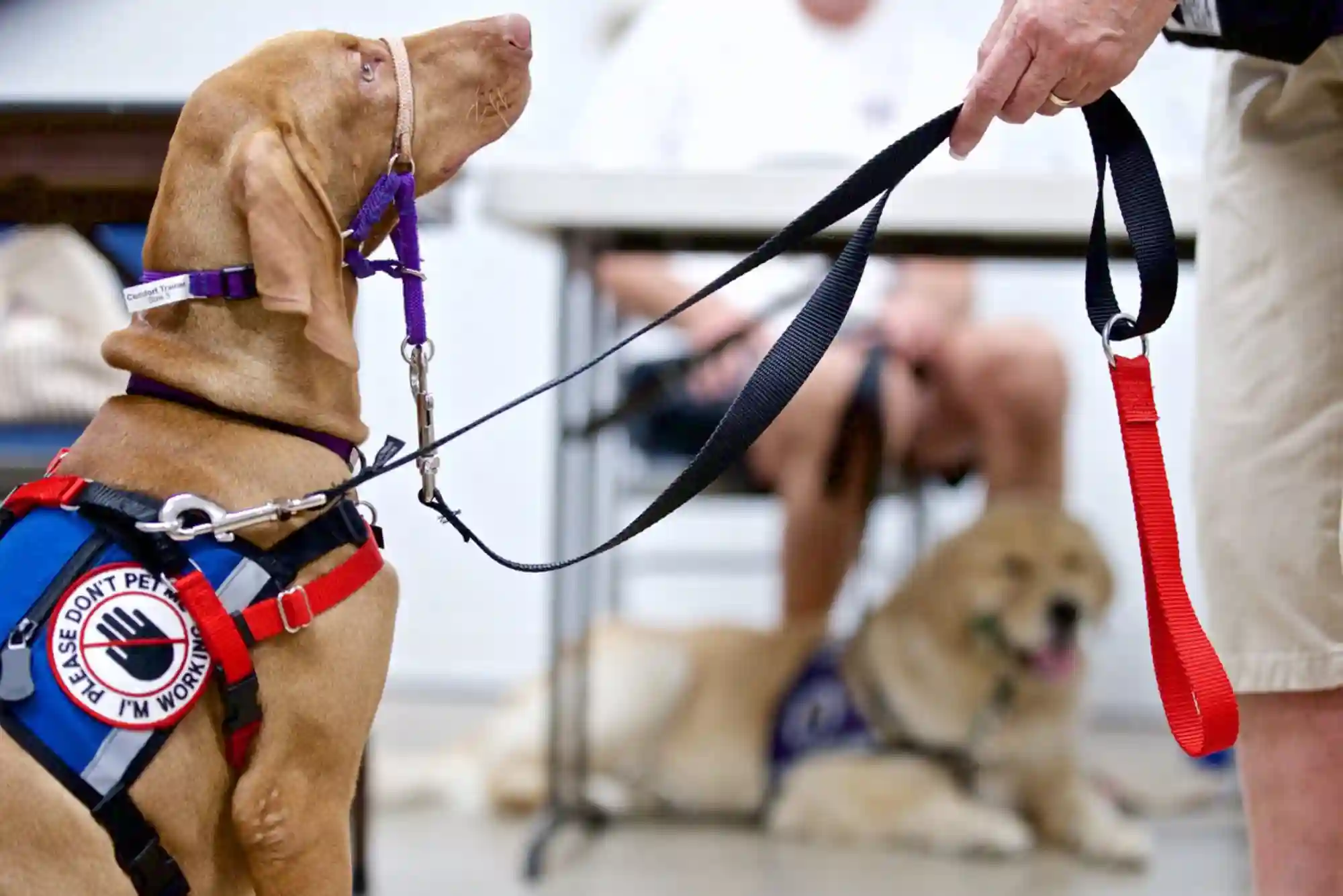
A vest does not make a dog a service animal. Likewise, an identification card does not establish service-animal status.
DOT guidance focuses on whether the dog is individually trained to perform work or tasks related to the handler’s disability.
Public behavior is also important. A service dog should remain under the handler’s control and behave appropriately around passengers, airline employees, and other animals.
Aggressive or disruptive behavior can create serious travel problems. Airlines can refuse transportation in circumstances permitted by DOT rules, including when an animal presents a direct threat or causes significant disruption.
What Happens at the Airport?
Arrive prepared rather than relying on last-minute explanations.
For a psychiatric service dog, airline staff may review required documentation. They may also observe the dog’s behavior.
The dog should remain under control throughout the airport journey. Depending on the circumstances, airlines can require a service dog to be harnessed, leashed, or tethered.
For an ESA traveling under a pet policy, follow the airline’s instructions for check-in, carriers, fees, and cabin placement.
Your preparation should match your animal’s actual classification.
Can a Service Dog Sit on Your Lap?
Do not assume that a service dog can occupy any location you choose.
DOT rules allow airlines to require a service animal to fit within the handler’s foot space. The animal cannot block an aisle or emergency exit.
Large dogs can therefore create practical challenges.
Before booking, consider the aircraft layout and the space available at your assigned seat. If necessary, contact the airline about appropriate seating arrangements.
Planning ahead can make boarding much smoother.
International Flights Need Extra Planning
The U.S. rules are only part of the travel process.
When flying internationally, the destination country may have separate animal-entry requirements. These can involve vaccination records, microchips, health certificates, import permits, quarantine rules, or other requirements.
An airline’s acceptance of your service dog does not automatically guarantee entry into another country.
Therefore, check both the airline requirements and the destination country’s animal-import rules.
This is particularly important when connecting through another country.
Common Mistakes to Avoid
Many travelers make avoidable mistakes because they confuse ESA and service-dog terminology.
One mistake is assuming that an ESA automatically has service-animal rights. Under current DOT rules, emotional support animals are not service animals.
Another mistake is relying on a certificate instead of proper training.
A third mistake is waiting until the airport to investigate documentation requirements.
It is also risky to assume that one airline’s policy applies everywhere. Airlines may have different procedures for pets and may provide different instructions for service animals.
Finally, never misrepresent a pet as a service dog. Accurate classification protects both travelers and legitimate service-animal users.
ESA vs Psychiatric Service Dog: The Practical Difference
The simplest way to understand How to Fly with an Emotional Support Animal (ESA) vs Psychiatric Service Dog (PSD) is to focus on function.
An ESA provides emotional comfort and is generally handled as a pet under current U.S. airline rules.
A psychiatric service dog performs trained tasks that directly mitigate a disability. It therefore falls within the DOT’s service-animal framework.
That difference affects the documents you may need, how the airline handles the animal, and whether service-animal protections apply.
If your animal is genuinely a psychiatric service dog, make sure its training and behavior support that classification.
If your animal is an ESA, review the airline’s pet policy before booking.
Frequently Asked Questions
Can I fly with an emotional support animal?
You may be able to fly with an ESA, but current U.S. DOT rules do not classify ESAs as service animals. The airline may transport the animal under its pet policy.
What is the difference between an ESA and a psychiatric service dog?
An ESA provides emotional support through companionship. A psychiatric service dog is individually trained to perform disability-related tasks. DOT treats qualifying psychiatric service dogs as service animals.
Can an airline ask for proof that my dog is a service animal?
Airlines can use permitted methods to determine whether a dog qualifies as a service animal. They may require applicable DOT forms concerning health, behavior, and training.
Do psychiatric service dogs fly free?
Under U.S. DOT rules, qualifying service dogs are generally accommodated in the cabin rather than transported as ordinary pets. However, travelers should confirm current airline procedures before flying.
Can an ESA sit in the cabin?
That depends on the airline’s current pet policy. Because ESAs are not service animals under current DOT rules, cabin access is generally governed by the airline’s pet rules.
Can a psychiatric service dog sit on an airplane seat?
Airlines can require a service dog to remain within the handler’s foot space. The dog cannot block safety-critical areas such as aisles or emergency exits.
Does my psychiatric service dog need a vest?
A vest does not create service-animal status. The important issue is whether the dog is individually trained to perform disability-related work or tasks.
Can airlines deny a psychiatric service dog?
Airlines may deny transportation in circumstances allowed under DOT rules. These can include a direct threat, significant disruption, failure to meet applicable requirements, or violation of relevant law.