
Moving one cat across the country can already require careful preparation. Moving several cats adds another layer of organization because every animal may respond differently to travel. One cat may sleep quietly inside a carrier, while another may become vocal, nervous, or reluctant to eat. A third cat may have medical or behavioral considerations that require special attention.
The first step is to look at the cats as individuals rather than assuming that one travel strategy will work equally well for all of them. Consider their ages, general health, previous experience with carriers, tolerance for car rides, and ability to cope with unfamiliar environments. Cats that have previously traveled comfortably by car may adapt more easily to a road trip, while cats that become extremely distressed during long car journeys may make you consider a shorter transportation period.
Before deciding between a car and an airplane, arrange a veterinary checkup when appropriate. Your veterinarian can help determine whether your cats are healthy enough for the planned journey and whether any cat requires additional preparation. This is particularly important for older cats, cats with chronic conditions, or cats that have previously experienced significant travel anxiety.
You should also make sure identification information is current. A microchip, updated contact information, and a secure identification system can provide additional protection if a cat accidentally escapes during a stop, hotel stay, or airport transfer.
Moving Multiple Cats by Car
For many families, driving is the most flexible way to move cats across the country. The biggest advantage is control. You can decide when to leave, where to stop, how long to drive each day, and where the cats remain during the journey.
A car also allows you to maintain a familiar environment. Your cats can remain in their own secure carriers while the vehicle travels from one destination to another. There are no airport security queues, boarding gates, aircraft cabin restrictions, or flight delays to manage.

However, a cross-country drive can take several days, depending on the starting point and destination. That means the journey itself becomes a temporary routine that must be carefully organized.
The carriers should be appropriately sized, secure, well ventilated, and positioned so they cannot slide around during driving. Each cat should have a safe containment arrangement appropriate to its needs. If multiple cats normally share space comfortably, do not automatically assume they should be placed together during a stressful journey. A veterinarian can help you determine the safest arrangement for your particular cats.
The vehicle temperature is another important consideration. Cats should never be left unattended in a parked vehicle, especially during hot or cold weather. Even a relatively short stop can become dangerous when temperatures inside a vehicle change rapidly.
Creating a Comfortable Car Environment
Cats generally benefit from a predictable environment during travel. Before departure, you can allow them to spend time around their carriers so the carriers do not become associated exclusively with an unfamiliar and stressful event.
A familiar blanket or bedding material can help make the carrier smell more recognizable. Avoid overcrowding the carrier with objects that could interfere with ventilation or safe movement. The goal is to create a secure, comfortable environment rather than a cluttered one.
The car itself should remain relatively calm. Loud music, unnecessary noise, and sudden changes in temperature can add to the stress of an already unfamiliar experience.
Food and water require thoughtful planning. Some cats may eat normally during travel, while others may have little appetite because of stress. Rather than making major changes to their normal diet immediately before departure, discuss feeding and hydration with your veterinarian. Bring the same food they normally eat whenever possible, because a long-distance move is not the ideal time for unnecessary dietary experimentation.
For a long road trip, plan realistic stopping points. The cats should remain securely contained whenever the vehicle is moving. When you stop, you need to think carefully about bathroom needs, hydration, feeding, ventilation, and security. Opening a carrier or vehicle door in an unfamiliar location creates an escape risk, so every movement should be controlled and deliberate.
Planning Overnight Stops With Cats
A cross-country road trip may require overnight stays. This can become one of the most complicated parts of the journey when you have multiple cats.
Before leaving, confirm that your chosen accommodation actually accepts cats and understand its pet policies. Do not assume that a hotel or rental property that allows dogs automatically has the same policy for cats.
When you arrive, carry the cats securely from the vehicle to the room. Keep doors closed while moving them into the new environment. Once inside, inspect the room for potential escape routes or hazards before allowing the cats any additional freedom.
The room should remain calm and secure. Keep food, water, litter supplies, medications if applicable, bedding, and cleaning materials organized so that you do not have to search through packed luggage every time something is needed.
Maintaining familiar routines can make temporary accommodation easier. Feeding at approximately the usual times and providing familiar bedding can help create continuity even though the surroundings have changed.
When Flying May Make More Sense
Air travel can dramatically reduce the physical duration of a cross-country move. A trip that might take several days by car can potentially be completed in a few hours of flight time, although the total door-to-door journey can be much longer once airport transportation, check-in, security, waiting, boarding, and baggage procedures are included.
For some owners, this shorter transportation period is appealing. For others, the airport environment creates additional challenges.
Airlines have their own pet policies, and those policies can differ significantly. Rules may address carrier dimensions, the number of pets permitted, cabin availability, fees, routes, and other conditions. USDA APHIS also notes that airlines may have their own requirements for pet travel, so travelers should verify the current rules directly with their airline before making plans.
This becomes especially important when you have multiple cats. You should never assume that because an airline accepts one cat, it will automatically accommodate several cats on the same flight or under the same reservation.
For example, some airlines limit how many pets can travel in the passenger cabin and may limit the number of pets per passenger. Delta’s published policy, for example, allows small dogs, cats, and household birds on certain flights in approved carriers, subject to its conditions and limitations. (Delta)
Because airline policies can change, check the current policy directly with the airline before purchasing tickets.
Multiple Cats and Airline Logistics
Traveling with multiple cats by air requires more logistical planning than traveling with one. You need to determine how many adults will be traveling, how many carriers are permitted, whether your cats can travel in the cabin, and whether the specific flight has available pet capacity.
It is particularly important to understand that an airline’s general pet policy does not necessarily mean that a particular flight has space available for pets. Pet capacity can be limited even when passenger seats are available.
If your cats cannot all travel under the same cabin arrangement, you may need to reconsider the transportation method rather than improvising at the airport.
Another consideration is the airport environment itself. Airports can be noisy, crowded, and unfamiliar. Cats may encounter people, luggage, announcements, aircraft noise, security procedures, and other animals.
The Transportation Security Administration provides procedures for travelers bringing pets through airport security. You should review current TSA instructions before traveling because security screening can require additional preparation compared with a normal passenger journey.
Car vs Flight: Comparing the Overall Experience
The car-versus-flight decision is not simply about which method is faster. It is about which transportation environment you can manage safely and realistically.
A car offers control over the schedule and environment. You can stop when necessary, maintain familiar routines, and avoid airport procedures. The disadvantage is that the cats may spend many hours or several days in transit.
A flight provides a shorter time in the main transportation vehicle but introduces airport procedures, airline restrictions, limited pet capacity, and less control over the travel environment.
For households with several cats, the number of animals can become the deciding logistical factor. A family traveling with two cats may have options that become significantly more complicated with four or five cats.
Cost also deserves consideration. Driving involves fuel, accommodation, food, tolls, and possible vehicle expenses. Flying involves airfare, pet fees, carriers that meet airline requirements, transportation to and from airports, and potentially additional costs associated with changing travel arrangements.
Rather than looking only at the ticket price or fuel cost, calculate the total cost of the journey.
Preparing Cats Before a Cross-Country Move
Preparation should begin well before moving day. Cats often respond better when major changes are introduced gradually rather than all at once.
If your cats are not comfortable with carriers, leave the carriers accessible at home before the journey. This gives them time to investigate the carriers without the immediate pressure of being transported.
You can also make the moving process less disruptive by packing gradually. If the entire household disappears around the cats within a few hours, the sudden environmental change can be unsettling. Maintaining normal routines for as long as possible can provide familiarity.
Keep important cat supplies separate from the rest of your moving boxes. Food, litter, bowls, bedding, carriers, cleaning supplies, identification information, veterinary records, and other necessities should remain immediately accessible.
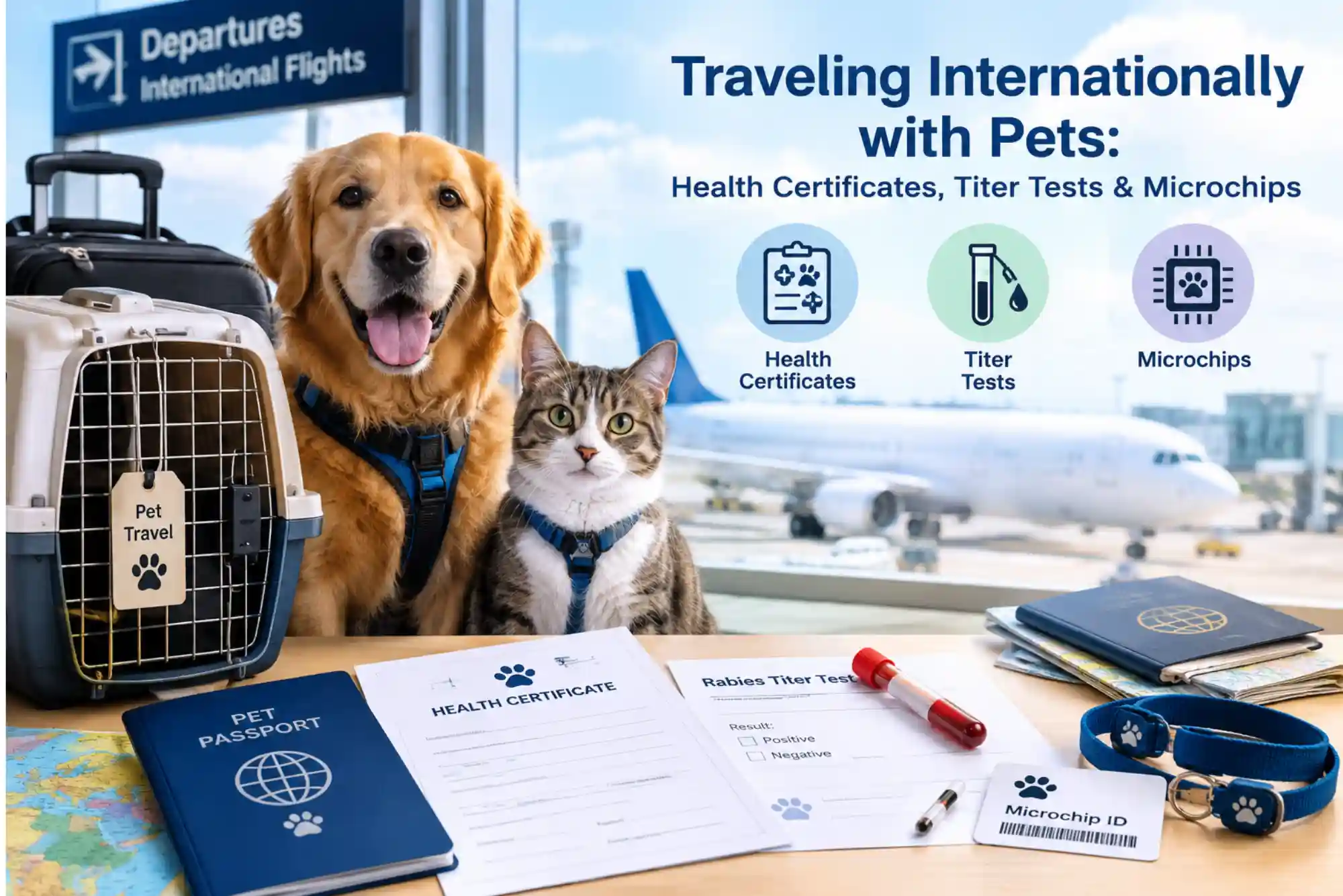
If you are traveling internationally at any point during the broader relocation, the planning becomes more complex. International pet travel can involve destination-specific health requirements, veterinary documentation, vaccinations, testing, and potentially official endorsement of health certificates. USDA APHIS recommends beginning the process as soon as travel is decided because requirements can take weeks or months depending on the destination.
For additional guidance on international pet transportation planning, travelers can also review international pet travel resources before finalizing their itinerary.
Veterinary Preparation for Long-Distance Cat Travel
A veterinary appointment can be an important part of preparing for a long-distance move. Your veterinarian can review your cats’ health status, discuss vaccination records, and advise you about any medical considerations relevant to the journey.
Do not independently give cats medication intended to make them sleepy or calm without veterinary guidance. Travel-related medications can have risks, and an animal’s response may vary. If medication is being considered, the veterinarian should determine whether it is appropriate and explain how it should be used.
Ask the veterinarian about the documentation that may be required at your destination. Domestic requirements vary by state and territory. APHIS specifically advises travelers to contact the destination state’s animal health authority because requirements are established by the receiving jurisdiction.
Keeping digital copies of records can be useful, but important original documents should remain safely accessible if they are required during the journey.
Managing Food, Water, and Litter During the Journey
A successful cross-country move depends partly on maintaining basic care routines. Cats need access to appropriate food, water, and litter arrangements during long travel periods.
For a road trip, you have greater flexibility to stop and manage these needs. For air travel, the situation is more restrictive because the cats remain in carriers and airport procedures limit what you can do during the journey.
Bring enough familiar food for the entire trip plus additional supply in case of delays. Sudden food changes during an already stressful journey can create unnecessary problems.
Litter is another consideration. Portable litter solutions can be useful during long road journeys and overnight stays. Some cats will use unfamiliar litter more readily than others, so maintaining the same litter type they already know may make the transition easier.
The important principle is preparation rather than improvisation. Once you are hundreds of miles from home, finding a specific food, litter, medication, or veterinary product may be difficult.
Keeping Cats Secure During Stops
Escape prevention should be one of the highest priorities during a cross-country move. Cats can behave differently when frightened, particularly in unfamiliar surroundings.
A cat that normally responds calmly to its owner may attempt to escape when exposed to an unfamiliar parking lot, hotel corridor, airport, or roadside environment.
During a car journey, keep carriers closed and secured before opening vehicle doors. When moving cats between the car and accommodation, make sure the carrier doors are firmly latched.
At hotels, do not open the room door while cats are loose near the entrance. Housekeeping, maintenance workers, or other guests may unexpectedly open the door from the hallway side.
Microchipping and updated identification information provide an additional layer of protection if an accidental escape occurs.
Helping Multiple Cats Adjust After Arrival
The journey does not end when you reach your new home. The cats must also adjust to the new environment.
A gradual transition can make the first days easier. Instead of immediately giving every cat access to the entire new home, consider establishing a secure, quiet area where they can settle.
Familiar bedding, food, litter, toys, and other recognizable items can help the new environment feel less unfamiliar.
Moving boxes, furniture, unfamiliar smells, and construction noise can create additional stimulation. Keeping one quiet area available can give cats a predictable place to retreat.
Over time, you can allow them to become familiar with additional areas of the home at a pace appropriate for their individual behavior.
Choosing the Right Strategy for Your Situation
There is no universal answer to whether driving or flying is better for a household with multiple cats. The decision should be based on practical circumstances rather than a simple assumption that one transportation method is always easier.
Driving offers flexibility, direct control, and the ability to manage stops according to your cats’ needs. It can be particularly useful when the household has several cats and wants to avoid airline capacity restrictions.
Flying can reduce the number of hours spent traveling across the country, but it requires careful coordination with the airline. Carrier requirements, pet limits, fees, route availability, airport procedures, and the number of travelers can all affect whether the plan is practical.
The cats’ individual health and temperament should remain central to the decision. A healthy cat that has previously handled car journeys may have a very different travel experience from a cat that becomes highly distressed during transportation.
For broader planning resources and pet travel information, Travel Flax can also be used as a reference while organizing your relocation.
Making the Move More Organized
Organization is especially valuable when several cats are involved. Create a dedicated travel area in your vehicle or luggage system for cat-related supplies. Keep essential items together instead of distributing them among multiple boxes.
Before departure, confirm your route, overnight accommodations, veterinary contacts, destination requirements, and transportation arrangements. If you are flying, confirm the airline’s pet policy again shortly before travel because policies and operational restrictions can change.
If you are driving, identify veterinary clinics along the route and keep the route flexible enough to accommodate unexpected delays.
A written travel plan can also reduce stress for the humans involved. When everyone knows where the carriers, food, litter, documents, cleaning supplies, and emergency items are located, it becomes easier to respond calmly if something unexpected happens.
For travelers who may eventually need international transportation as part of their relocation, international pet travel guidance can provide additional planning context alongside official government and airline requirements.
Final Thoughts on Moving Cross-Country With Multiple Cats
Moving cross-country with multiple cats requires more preparation than moving with a single pet, but careful organization can make the experience much more manageable. The most important decision is not simply choosing between a car and an airplane. It is creating a transportation plan that considers the health, temperament, number, and individual needs of every cat.
A road trip gives you more control over the journey and allows you to adjust the schedule when necessary. Flying can shorten the main transportation period but requires closer attention to airline policies, carrier requirements, pet capacity, airport procedures, and travel documentation.
Regardless of the method, preparation should begin before moving day. Talk with your veterinarian when appropriate, verify destination requirements, prepare secure carriers, keep familiar supplies available, and make a plan for food, water, litter, overnight accommodation, and identification.
For interstate travel within the United States, remember that destination-state requirements can differ, and APHIS recommends checking with the receiving state’s animal health authority rather than assuming that the same rules apply everywhere.
Most importantly, avoid making the journey more complicated than necessary. A calm environment, secure transportation, familiar supplies, and a well-prepared itinerary can help you focus on keeping your cats comfortable while you make the transition to your new home.
SEO note: The article uses the two internal URLs 3 times total—two references to the international pet-travel page and one reference to the main site. The regulatory information above is based on current USDA APHIS guidance, which notes that interstate pet requirements are determined by the destination state and that airlines can impose their own pet-travel requirements