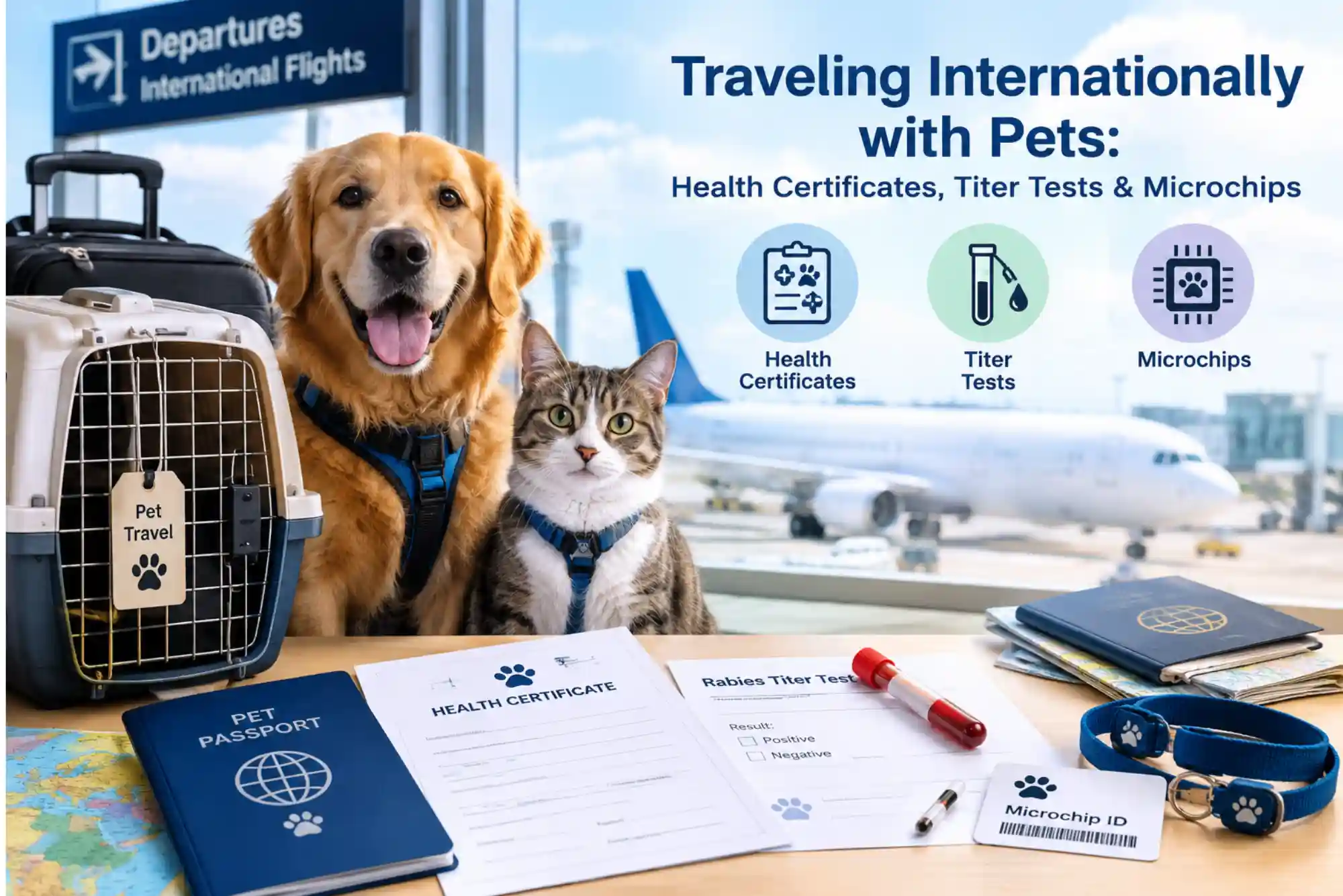
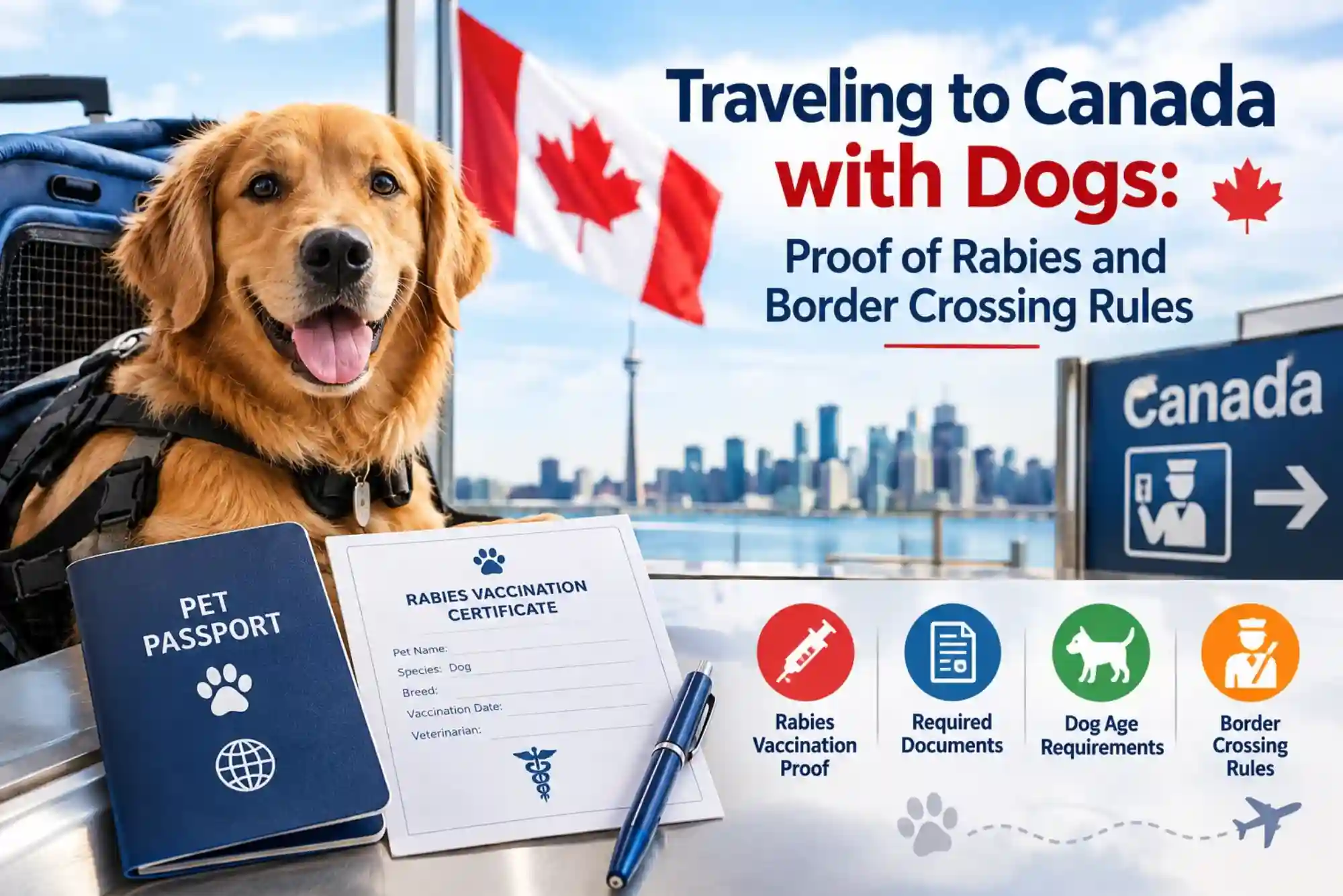
Traveling internationally with a dog requires more preparation than simply booking a flight and choosing a suitable carrier. When Canada is your destination, understanding the country’s animal import requirements is especially important because dogs must meet specific health and documentation rules before they can enter.
Among the most important requirements is proof that the dog is properly vaccinated against rabies when the applicable rules require it. Pet owners also need to consider the dog’s age, country of origin, travel purpose, veterinary documents, airline requirements, and the circumstances under which the dog will enter Canada.
For pet owners, the border crossing can be one of the most stressful parts of an international journey. A missing vaccination certificate, unclear veterinary document, incorrect information about the dog’s age, or a misunderstanding about the country from which the dog is arriving can create unnecessary delays.
This guide explains the major considerations for traveling to Canada with dogs, with particular attention to proof of rabies vaccination and border crossing requirements. It also explains how to prepare your dog’s documents, what to discuss with your veterinarian, and how to make the overall journey more organized.
If you are planning a wider international journey with your pet, you can also explore international pet travel for additional information about preparing pets for international transportation.
Understanding Canada’s Dog Import Rules
Canada regulates the importation of animals to help protect animal health and prevent the introduction of diseases. The requirements can apply to dogs entering Canada permanently, temporarily, or returning to Canada after international travel.

This means that even if you are taking your dog to Canada only for a vacation, you should not assume that temporary travel means there are no import requirements. Your dog still needs to meet the requirements that apply to its individual circumstances.
The rules can vary depending on whether the dog is travelling from a rabies-free country, a country that is not recognized as rabies-free, the dog’s age, whether the dog is accompanied by its owner, and whether the trip is personal or commercial.
For this reason, preparing for international pet travel should begin well before the departure date. Waiting until the last few days can make it difficult to arrange vaccinations, veterinary certificates, laboratory testing, or other required paperwork.
Why Rabies Proof Matters When Traveling to Canada With Dogs
Rabies is a serious disease that can affect both animals and humans. Because of the risks associated with rabies, Canadian animal-import requirements place significant importance on vaccination documentation for dogs arriving from countries where different rabies risks may apply.
For many dogs arriving from countries that are not recognized as rabies-free, a valid rabies vaccination certificate can be one of the most important documents required for entry.
The certificate should clearly identify the dog and demonstrate that the dog is currently vaccinated against rabies when that requirement applies.
In certain circumstances, a rabies antibody titre test may also be relevant. The exact requirements can depend on the dog’s country of origin, age, vaccination history, and purpose of importation.
Because of these differences, dog owners should avoid assuming that the requirements for one animal automatically apply to another. A veterinarian and the current Canadian animal-import requirements should be consulted before travel arrangements are finalized.
What Should a Rabies Vaccination Certificate Show?
A rabies vaccination certificate is more than a simple note confirming that a dog received a vaccine. The document should contain sufficient information to identify the animal and establish the vaccination details.
Before travelling, check that the dog’s name, identification information, vaccination information, dates, and veterinarian details are accurate and consistent with the dog’s other records.
A professional veterinary certificate is especially important when travelling internationally because border officials may need to determine whether the documentation belongs to the animal being presented.
If your vaccination record is written in a language other than English or French, do not assume that an informal translation will automatically be accepted. Ask your veterinarian about the appropriate documentation and confirm the current Canadian requirements before departure.
Keeping accurate records can make the border process much easier and can reduce the risk of discovering a documentation problem after arriving at the airport.
Traveling From Pakistan to Canada With a Dog
Travelers bringing a dog from Pakistan should pay particularly close attention to rabies-related requirements. Pakistan is currently considered a high-risk country for dog rabies under Canadian animal-health rules.
This means that dog owners travelling from Pakistan should carefully review the applicable rabies documentation requirements before making final travel arrangements.
For a personal pet dog arriving from a country that is not designated as rabies-free, applicable requirements can include a valid rabies vaccination certificate or, in certain circumstances, an acceptable rabies antibody titre test.
However, not every dog travelling from Pakistan necessarily follows exactly the same process. The dog’s age, whether it is travelling with its owner, and the purpose of the import can affect which requirements apply.
If you are preparing a journey from Pakistan to Canada, start by reviewing your dog’s complete vaccination and veterinary records. It is much easier to correct a documentation issue while you are still at home than after reaching the airport or Canadian border.
Dog Age and Canadian Entry Requirements
Age is another important consideration when preparing to travel to Canada with a dog.
Different provisions can apply to dogs under eight months of age and dogs eight months or older. There can also be differences between dogs travelling with their owners and dogs travelling without their owners.
This distinction is especially important when travelling with puppies. A puppy may have different documentation requirements from an adult dog, and additional veterinary certification can apply in certain circumstances.
Dog owners should therefore avoid applying adult-dog requirements automatically to puppies.
If you are travelling with a young dog, discuss the planned journey with a veterinarian well before departure. The veterinarian can help you determine which vaccinations and documents should be completed and when they should be completed.
The timing of veterinary procedures is important because some requirements may depend on the date of vaccination, testing, examination, or certification.
Does a Dog Need Quarantine After Entering Canada?
For ordinary pet dogs, post-import quarantine is generally not imposed simply because the dog is entering Canada.
However, this does not mean that documentation can be ignored.
If a dog arrives at the border without meeting the applicable requirements, authorities can review the animal’s eligibility. Depending on the circumstances, enforcement action may be taken.
This is why preparation before departure is so important. A dog owner should not rely on the assumption that any missing document can simply be arranged after arriving in Canada.
The best approach is to make sure the applicable requirements have been reviewed and completed before the journey begins.
What Happens at the Canadian Border?
When you arrive in Canada, you should be prepared to declare your dog and present the relevant documentation if requested.
Border officials may need to verify that the animal satisfies the applicable entry requirements. This can include reviewing vaccination information and other documentation associated with the dog’s importation.
Keep your dog’s important documents in an easily accessible travel folder rather than packing them deep inside your luggage.
It is also useful to keep digital copies of important records. However, digital copies should be considered a backup rather than a complete replacement for original paperwork when original documents are required.
A well-organized travel folder can contain the dog’s rabies vaccination certificate, veterinary records, identification information, health documents, and any other documents relevant to the journey.
Veterinary Preparation Before the Trip
A veterinarian should be an important part of your international pet travel preparation.
Before travelling, your veterinarian can review your dog’s vaccination history, assess its general health, and explain which veterinary procedures or documents may be necessary for the planned journey.
It is better to contact the veterinarian as soon as you know that international travel is being considered. Some vaccinations, laboratory tests, and certificates may have timing requirements.
If you wait until immediately before departure, there may not be enough time to complete every necessary step.
Your veterinarian should also make sure that the information on the dog’s vaccination certificate matches the animal’s other records. Consistent documentation can help reduce confusion during travel.
For additional resources about preparing pets for international journeys, you can also visit Travels Flax International Pet Travel.
Air Travel and Airline Requirements
Meeting Canada’s government requirements is only one part of travelling internationally with a dog.
Airlines can have their own rules for transporting animals. These requirements may concern the size and type of travel carrier, advance reservations, health documentation, breed restrictions, temperature restrictions, and whether a dog can travel in the cabin or must travel in another part of the aircraft.
Therefore, dog owners should check the airline’s current pet policy before purchasing or finalizing their ticket.
A dog can satisfy Canadian entry requirements but still encounter an airline-related problem if the carrier or airline procedures do not meet the company’s requirements.
This is why airline preparation and Canadian border preparation should be treated as two separate parts of the same travel plan.
Preparing Your Dog for a Long International Journey
International travel can be stressful for dogs, especially when they are not accustomed to carriers, airports, long flights, unfamiliar environments, or changes in routine.
Before the journey, give your dog time to become familiar with the travel carrier. If your dog has never spent time in a carrier, introducing it shortly before the flight may increase anxiety.
Instead, allow your dog to gradually become comfortable with the carrier before travelling.
Your veterinarian can also discuss whether your dog is suitable for travel and provide advice about managing the health and comfort considerations associated with a long international journey.
Food, water, exercise routines, and rest should also be considered when planning the journey.
The objective is to make the travel experience as organized and predictable as possible.
Keeping Your Travel Documents Organized
Good organization can prevent many avoidable problems.
Your dog’s travel file should contain the applicable rabies vaccination certificate, veterinary records, health documentation, identification information, and any additional documents required for your specific route and circumstances.
Do not rely entirely on photographs stored on one phone. Keep paper copies of important documents and maintain digital backups.
It is also useful to store digital copies in a secure location that can be accessed if your phone is lost or damaged.
If you are travelling with other family members, make sure another responsible adult knows where the dog’s documents are stored.
A simple organization system can make a significant difference during airport check-in and border procedures.
Common Mistakes Dog Owners Should Avoid
One common mistake is assuming that a valid rabies vaccination automatically means that a dog can enter Canada without any additional consideration.
The actual requirements can depend on the dog’s country of origin, age, purpose of travel, and whether the animal is accompanied by its owner.
Another common mistake is waiting until the final days before departure to check paperwork. Some veterinary documents and tests may have specific timing requirements, so delaying preparation can create unnecessary complications.
A third mistake is relying on outdated information from social media, old travel forums, or a previous international trip.
Animal-import requirements can change, so information that was correct several years ago may no longer describe the current process.
Finally, some travelers focus entirely on Canadian border requirements and forget to check airline rules. Both sets of requirements need to be considered.
Temporary Visits to Canada With a Dog
Not everyone entering Canada with a dog intends to move permanently.
Some people visit Canada for holidays, family visits, business trips, events, or other temporary purposes.
However, a temporary visit should not automatically be treated as an exemption from animal-import requirements.
Before leaving your home country, determine exactly which category applies to your dog.
This is particularly important if the dog is young, travelling without its owner, or arriving from a country with a higher rabies risk.
Understanding the rules before the journey gives you time to correct problems while you are still at home.
Returning to Canada With a Dog
Canadian residents who travel abroad with their dogs and later return to Canada should also check the requirements for the return journey.
A Canadian-owned dog should not automatically be assumed to have unrestricted entry after travelling internationally.
The requirements can depend on where the dog has travelled and the circumstances of the return.
For this reason, the return journey should be considered when planning the original trip.
A traveler who knows in advance that the dog will return to Canada can prepare the appropriate documents before leaving.
Why Requirements Can Change
Animal-health regulations can change in response to disease risks and other public-health or animal-health considerations.
Countries may be added to or removed from different categories, and specific rules can be modified.
This is particularly important for travelers who plan their trip months in advance.
Information found online should therefore be checked again close to the departure date.
Do not rely solely on an old article or a previous travel experience. Always confirm the current requirements that apply to your specific dog and route.
Commercial and Personal Dog Imports Are Not the Same
Another important distinction is whether you are travelling with your own family pet or importing a dog for a commercial purpose.
Commercial purposes can include sale, adoption, breeding, resale, or other activities.
Rules for commercial dog imports can be different from those for a family pet travelling with its owner.
For example, special measures can apply to certain commercial dogs from countries considered high-risk for dog rabies.
Therefore, someone purchasing or adopting a dog from another country should not automatically assume that the rules for a vacation pet apply to the transaction.
If your journey involves adoption, sale, breeding, or another commercial purpose, determine the appropriate import category before making travel arrangements.
How to Plan a Smooth Border Crossing
The easiest way to make a Canadian border crossing more organized is to prepare well before departure.
Start by identifying your dog’s country of origin and age. Determine which rabies category applies and review the relevant vaccination documentation requirements.
Next, speak with your veterinarian about your dog’s records and any required tests or certificates.
If you are flying, check your airline’s current pet policy. Confirm carrier requirements, documentation rules, reservation procedures, and any restrictions that may affect your dog.
Keep the original documents together with paper copies and digital backups.
Finally, review the applicable Canadian requirements again shortly before departure.
For general pet-travel planning and additional information about international journeys, Travels Flax can also be a useful resource.
Frequently Asked Questions About Traveling to Canada With Dogs
Does my dog need proof of rabies vaccination to enter Canada?
For many dogs arriving from countries that are not designated as rabies-free, rabies documentation is an important part of the entry requirements. Depending on the circumstances, this may involve a valid rabies vaccination certificate or another acceptable form of rabies documentation.
The exact requirements depend on the dog’s country of origin, age, and circumstances of importation.
Is Pakistan considered a high-risk country for dog rabies?
Pakistan is currently included among the countries considered high-risk for dog rabies under Canadian animal-health rules.
Dog owners travelling from Pakistan should therefore pay particular attention to rabies vaccination records and other applicable documentation.
Can a puppy travel to Canada?
Young dogs can travel to Canada under specific conditions, but the requirements can differ according to age, country of origin, whether the puppy travels with its owner, and the purpose of importation.
Puppies travelling without their owners may have additional veterinary certification requirements.
Does a pet dog have to stay in quarantine after entering Canada?
Ordinary pet dogs are generally not subject to post-import quarantine simply because they enter Canada.
However, dogs must still satisfy the applicable import requirements. If a dog does not meet those requirements, authorities can take appropriate action depending on the circumstances.
Should I carry paper copies of my dog’s documents?
Yes. Paper copies are useful during international travel, particularly if officials need to review documentation.
Digital backups are also useful, but travelers should not rely entirely on a phone or electronic copy.
Does the airline have additional requirements?
Yes. Airlines can establish their own requirements for transporting dogs.
These can include carrier specifications, advance booking requirements, documentation, temperature restrictions, and other conditions.
Always check directly with your airline before travelling.
Final Thoughts
Traveling to Canada with dogs can be much easier when preparation begins well before the departure date.
The most important point is that Canadian dog-entry requirements are not necessarily identical for every animal. Requirements can depend on the dog’s age, country of origin, purpose of travel, and whether the dog is travelling with its owner.
Rabies documentation is particularly important for dogs arriving from countries that are not recognized as rabies-free. Travelers from Pakistan should pay especially close attention to vaccination records and any additional requirements that may apply.
Your dog’s veterinary documents should be accurate, organized, and readily accessible. Keep paper copies as well as digital backups, and check airline requirements separately from Canadian border requirements.
Do not wait until the airport or Canadian border to discover that a document is missing. Preparing early gives you time to speak with your veterinarian, arrange required documentation, and correct potential problems.
International pet travel is ultimately about preparation. With organized paperwork, appropriate veterinary planning, and an understanding of the applicable border requirements, dog owners can make the journey more predictable and manageable.
For additional international pet travel information, you can visit Travels Flax and explore Travels Flax for more pet and travel-related resources.
Important: Canadian animal-import requirements can change, and the rules applicable to your dog depend on its individual circumstances. Always verify the latest official requirements before travelling.